
/Swept%20Website/All%20Icons/icons/scheduled%20event.svg)



In commercial cleaning, your team is your product. Clients aren’t just paying for supplies—they’re paying for reliable, high-quality service. The difference between a struggling owner and a growing business is moving from “just filling spots” to building a strong, professional team.
This guide covers hiring, onboarding, and retaining cleaners, with practical tips you can apply today—and ways Swept can make it easier.
1. Know Who to Hire
Different commercial sites—offices, medical facilities, warehouses—require different skills and mindsets. Look for:
- Physically capable and consistent workers: Cleaning is active work—lifting, bending, moving furniture, and handling equipment. Candidates need the stamina for night or early-morning shifts.
- Independent problem-solvers: Hire staff who notice issues and act on them—like refilling soap, fixing a small problem, or reporting something that needs attention—without waiting for a supervisor.
- Long-term night/evening workers: Avoid candidates treating cleaning as temporary work. Focus on people who want steady shifts over time, which reduces turnover.
Tip: Ask situational questions during interviews, such as: “You notice a spill in the hallway after hours. What do you do?” This shows whether they take initiative.
2. Creative Sourcing: Find Cleaners Where Others Don’t
Posting on generic job boards isn’t enough. To scale, you need multiple ways to reach quality candidates:
- Tiered Referral Programs: Your current cleaners often know other reliable workers. Reward them for referrals that stick:
- $50 after the new hire completes week 1
- $150 after 90 days
- $300 after 6 months of perfect attendance
- Targeted Local Ads (“Geofencing”): Show ads only to people within a certain distance from your contract site (like 5 miles). This reduces long commutes, no-shows, and late arrivals.
- Platforms: Facebook, Instagram, and Google allow geofenced advertising.
- Example: A cleaner sees your ad only if they’re near the office building you need covered.
- Community Partnerships: Reach out to trade schools, vocational programs, workforce centers, or student organizations. Students often want flexible night shifts that don’t interfere with daytime classes.
- Tip: Highlight benefits in ads—steady pay, opportunities to advance, and flexible schedules—to attract candidates who treat cleaning as a career, not a temporary job.
3. A Simple, Professional Hiring Process
Your hiring process should filter for quality, not just speed.
- Attention Test: Include a hidden instruction in your job ad, e.g., “Start your cover letter with the name of your favorite floor cleaner,” to filter out applicants who don’t read instructions.
- Behavioral Interview: Ask situational questions to test initiative, problem-solving, and client focus. Example:
- “You run out of disinfectant halfway through a shift. What do you do?”
- “A client says a conference room wasn’t cleaned properly. How do you handle it?”
- Background & Reliability Check: A clean record is important for clients, especially in secure or sensitive locations.
- Practical Skills Test: Give candidates a hands-on 30-minute cleaning task. Watch for organized, methodical cleaning patterns (top-to-bottom, left-to-right) rather than random movement. Systematic work reduces missed spots.
Swept Tip: Record results digitally for each applicant—building a full profile makes future hiring easier.
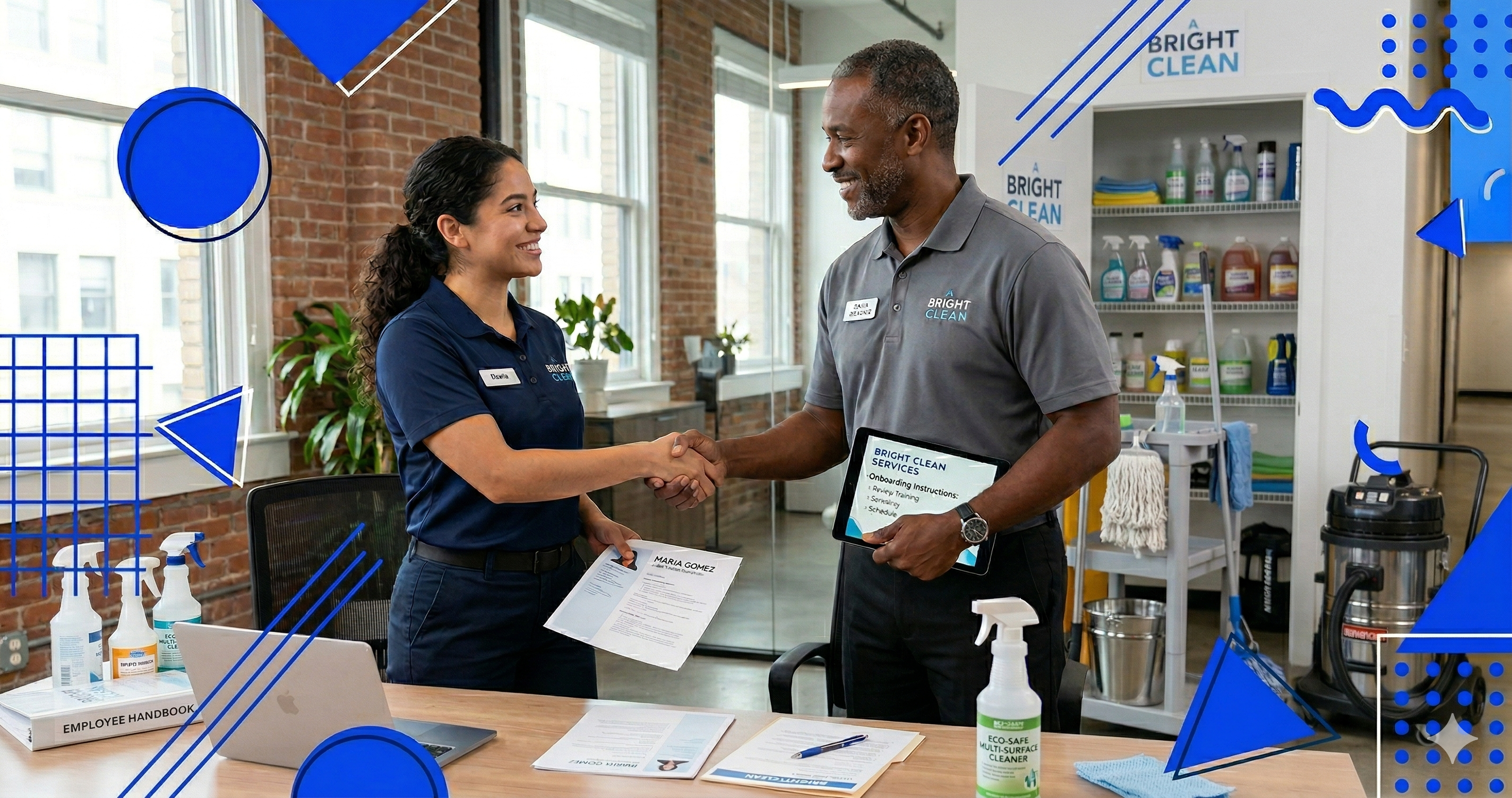
4. Onboarding: The First Two Weeks
Most turnover happens in the first 14 days because new hires feel confused or unsupported. Set them up for success:
- Site Checklists: Every site should have maps, “hot zones,” photo guides, and emergency contacts so new hires know exactly what to do.
- Shadow Program:
- New hire observes an experienced staff member
- Experienced staff observes the new hire
- New hire works independently while supervisor audits the results
5. Risk Management: Keep Your Teams Covered
A single no-show can put a contract at risk. The goal isn’t to overhire—it’s to have simple backup plans that actually work.
- Build a small backup bench: Instead of dedicated “on-call” staff (which can get expensive), identify a few reliable cleaners who are open to picking up extra shifts when needed. Cross-train them on multiple sites so they can step in with minimal disruption.
- Early shift confirmation: Ask cleaners to confirm their shift ahead of time (for example, earlier that day or a few hours before). This gives you time to adjust coverage if needed.
Swept Tip: No-show and late alerts help you catch issues quickly and respond faster. - Standardize your sites: Use consistent checklists, instructions, and supply setups across locations. That way, when someone steps in last-minute, they’re not starting from scratch.
- Keep a short “backup list”: Maintain a list of past employees, part-timers, or strong performers who are open to occasional shifts. This is often more reliable than scrambling last-minute.
6. Retention and Career Growth
Cleaners stay when they feel supported, recognized, and able to grow:
- Clear Quality Standards & Visibility: Use Swept inspections to rate work, capture photos, and track performance over time. Supervisors can quickly see who’s consistently delivering strong results—and who needs support—so feedback is clear and fair. Why it matters: When expectations are clear and performance is visible, cleaners feel more confident in their work and more recognized for doing it well.
- Career Path (Make Growth Visible): Give cleaners a clear path so they know what they’re working toward:
- 90 days: Trusted team member (eligible for referrals, consistent scheduling)
- 1 year: Site Lead (more responsibility, keyholder access, potential pay increase)
- Experienced: Supervisor or trainer role (overseeing sites or supporting new hires)
7. Labor Management: Protect Your Margins
Labor is your biggest expense. Smart investment pays off:
Track labor cost per site versus revenue in Swept to see exactly where your team is most efficient.
8. Compliance and Audit Readiness
As your business grows, regulators may take notice. Stay prepared:
- Training Records: Keep OSHA and chemical-handling (GHS) certifications digital, signed, and organized.
- Worker Classification: Ensure 1099 contractors vs employees are classified correctly to avoid fines.
9. How Good Hiring Fuels Growth
Good hiring creates a cycle of improvement:
- Hire reliable, high-performing cleaners.
- They deliver excellent service, keeping clients happy.
- Happy clients lead to more contracts or higher-paying work.
- Higher-paying work allows you to pay better wages.
- Better wages attract even stronger talent, creating a stable, professional team.
In short: Great hiring improves results, revenue, and retention, making your business easier to manage and scale.
How Swept Helps You Retain Your Team
Hiring is hard—keeping great cleaners shouldn’t be. Swept gives your team the clarity and support they need to stay:
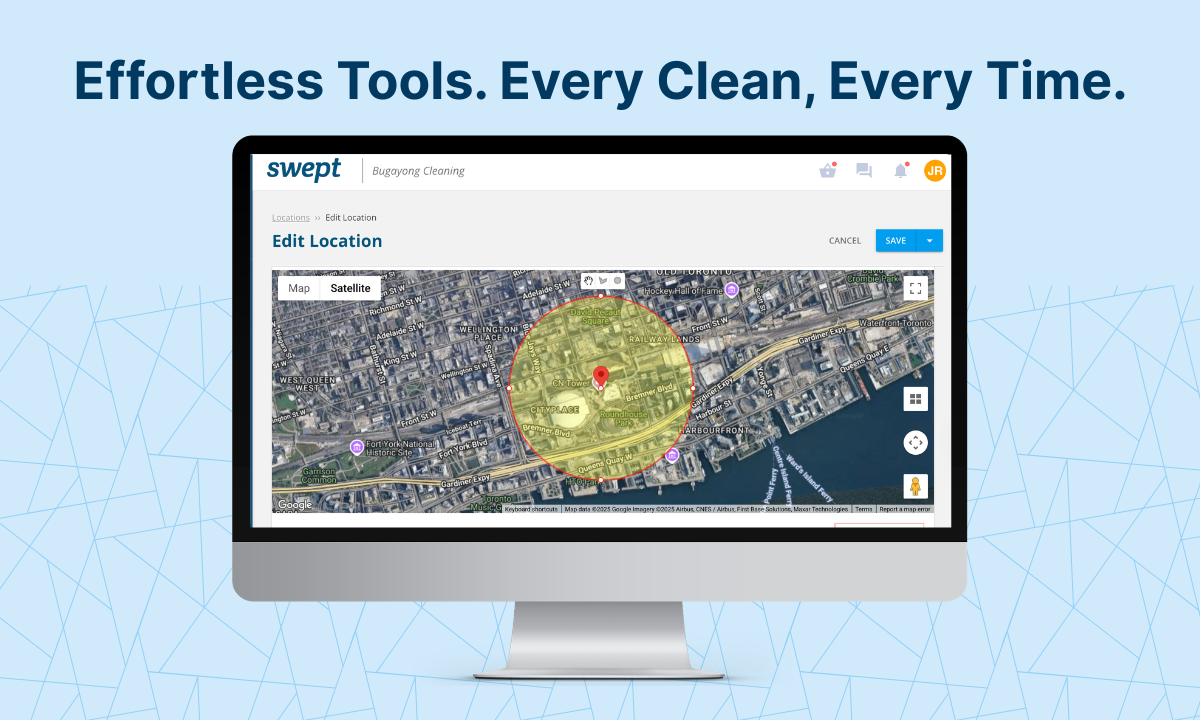
- Never miss a shift: Simple scheduling, mobile clock in/out, and GPS tracking keep everyone accountable.
- Faster, accurate payroll: Track hours, breaks, and export reports without the manual work.
- Clear, instant communication: Message your team in real time, in 100+ languages, with a full Spanish app.
- Consistent quality: Inspections and checklists help cleaners hit the standard every time.
- Built-in support: Onboarding guides, training, and live chat keep your team moving without delays.
The result: Fewer no-shows, better performance, and a team that sticks—so you can grow without constantly rehiring.