/Swept%20Website/All%20Icons/icons/scheduled%20event.svg)


/Swept%20Website/All%20Icons/icons/webinar.svg)

Running a cleaning business today isn’t about who has the nicest mop—it’s about who has the smartest systems. The gap between standard cleaning providers and high-performance facility partners keeps widening.
If you’re not paying attention to these commercial cleaning industry trends, you’re not just falling behind—you’re becoming a commodity in a market that rewards specialists.
1. All-in-One Operations Platforms
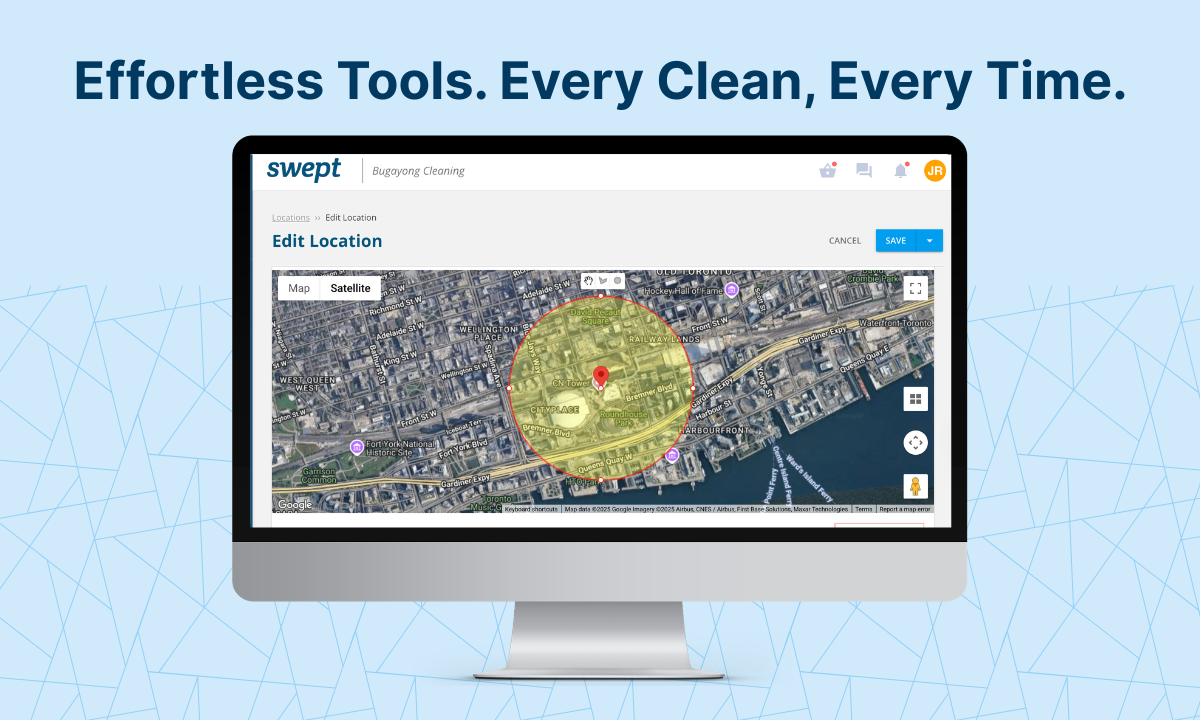
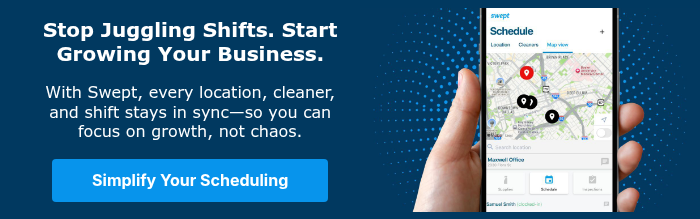
Many cleaning businesses still juggle WhatsApp for communication, spreadsheets for scheduling, and paper checklists for inspections. The problem is these fragmented tools create friction, missed shifts, and mistakes that quietly drain profits.
Why it matters: Fragmented tools aren’t just inconvenient—they silently drain profits. Missed shifts, duplicate work, and lost client communications all cost money. A centralized platform improves accountability, reduces errors, and makes scaling easier. Clients see professionalism, and your team wastes less time chasing info.
Actionable Tip: Move scheduling, payroll, communication and client reporting into a single platform so everything lives in one place.
2. Predictive & Demand-Based Cleaning
Static cleaning schedules—cleaning every desk every night—are expensive and inefficient, especially with hybrid work being the norm. Using occupancy sensors and usage data lets your team focus on the areas that actually get used.
Why it matters: Every hour spent cleaning empty spaces is wasted labor and money. Clients notice when cleaning is smart and efficient, not just routine. Adopting demand-based cleaning improves margins, reduces supply waste, and positions you as a strategic partner rather than a commodity.
Actionable Tip: Offer contracts that adjust based on usage—prioritize high-traffic areas and reduce work in empty spaces.
3. Indoor Air Quality (IAQ) & Wellness Reporting
Clients care about more than what looks clean—they want proof that employees are working in a healthy environment. Indoor Air Quality (IAQ) measures things like dust, allergens, CO2, and other airborne particles that affect health and comfort. Sharing IAQ results as part of your service gives clients tangible evidence that your cleaning is making a real difference—not just in appearance, but in the air their team breathes.
Why it matters: “It looks shiny” isn’t enough anymore. Showing improvements in air quality strengthens client trust, demonstrates measurable impact, and can even support their ESG goals. Businesses that prioritize health reporting tend to secure stronger renewals and higher-value contracts.
Actionable Tip: Incorporate HEPA filtration and simple air quality monitoring, then provide clients with a “Health Scorecard” alongside your cleaning report so they can see the results for themselves.
4. Cobotics: Smarter Automation
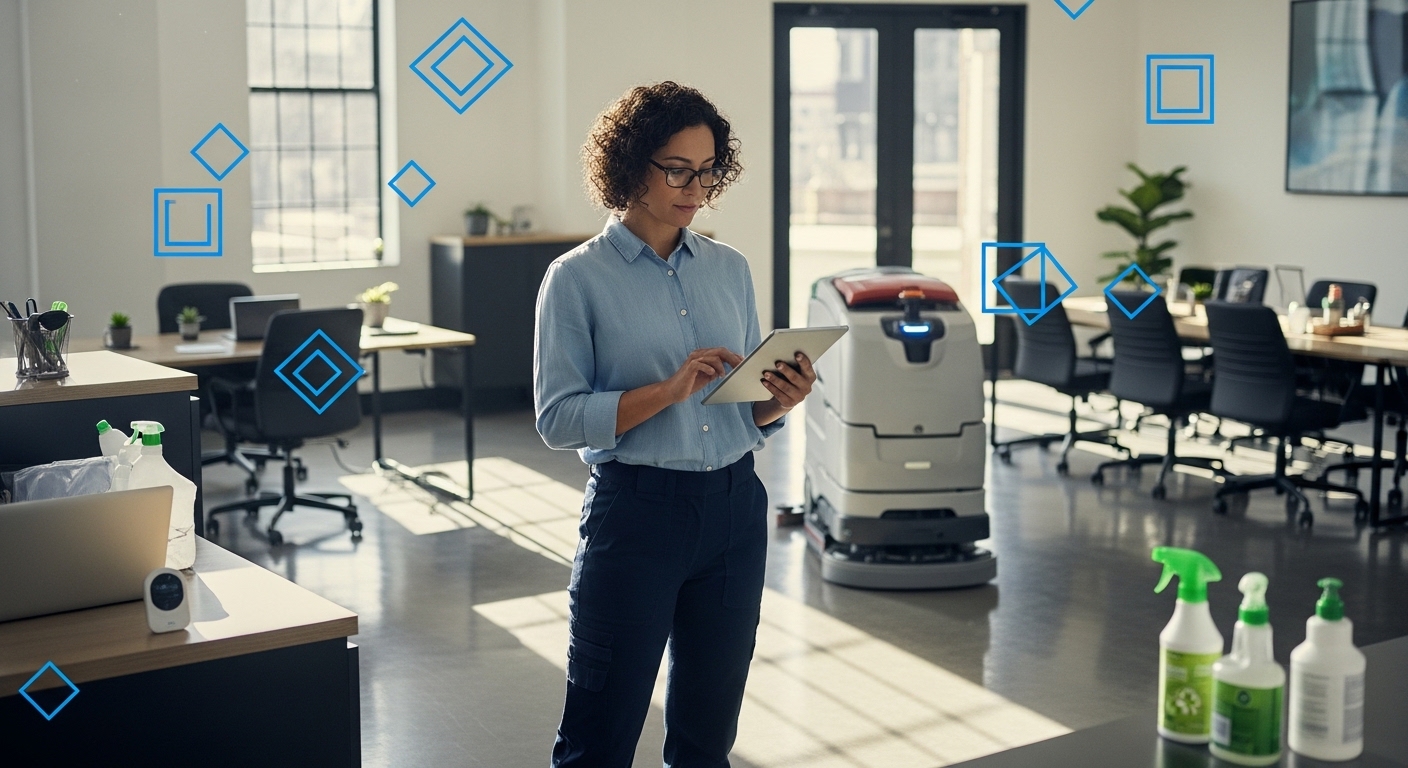
Autonomous vacuums and floor scrubbers, or cobots, handle repetitive, low-value tasks alongside your team. This means your staff can focus on the high-touch, detail-oriented cleaning that clients notice, while machines cover the repetitive work.
Why it matters: Labor shortages and burnout are real. Cobots free your staff from tedious tasks, making them more satisfied and engaged. Consistent results improve client trust and make your bids more competitive.
Actionable Tip: Pick your largest, most repetitive site and pilot one autonomous machine this quarter.
5. ESG & Sustainable Practices
Corporate clients increasingly want to track their Environmental, Social, and Governance impact. They aren’t just checking for “green cleaning” labels—they want data: reduced waste, water efficiency, and lower carbon footprints.
Why it matters: Sustainability is now a differentiator in bids and renewals. Clients want proof that your service supports their ESG goals. Companies that embrace circular systems, like concentrated refills instead of single-use plastics, strengthen client relationships and improve their own operational efficiency.
Actionable Tip: Track environmental impact, implement circular supply systems, and share quarterly sustainability reports with clients.
6. From Janitor to Facility Technician
Cleaning isn’t just sweeping and mopping anymore. Staff need to operate sensors, manage automation, and handle reporting systems. Treating your team as skilled facility technicians rather than just janitors boosts engagement, reduces turnover, and improves service quality.
Why it matters: Skilled, confident staff produce higher-quality results and give clients confidence in your work. Upskilling also makes your team more adaptable to new tech and more valuable to your business.
Actionable Tip: Rebrand roles as “Facility Technicians” and include digital literacy and equipment training in onboarding.
7. Specialization & Micro-Niche Dominance
Standard office cleaning is crowded and often low-margin. Specialized environments like labs, data centers, and biotech facilities require compliance expertise but pay premium rates.
Why it matters: Specialized skills protect your pricing, reduce competition, and make your business the go-to provider in your niche. Certification and expertise give clients confidence and position you as a trusted partner, not just a vendor.
Actionable Tip: Choose one technical vertical, get certified, and market your team as the local specialist.
Ready to Put These Trends Into Action?
Keeping up with the latest commercial cleaning industry trends can feel overwhelming, but the right tools make it simple. Swept helps cleaning business owners manage schedules, track team performance, run inspections, and report results—all from one easy-to-use platform.