



Janitorial companies win and keep contracts by selling proof, not promises. Show a prospect exactly how one night at their building will run, how they'll hear about problems, who comes in and out, and how quality is measured. Then deliver that same record every night after you win.
Most janitorial owners who lose a bid blame price. Often, price wasn't the problem. The pitch was. Three companies submit numbers within a few percent of each other, and every one of them promises "reliable," "detail-oriented" and "trusted." The property manager can't tell them apart, so they pick the cheapest, or they stay with the company they already know.
Commercial cleaning is moving from "trust me" to "show me." The companies winning contracts now are the ones that can show it.
Why janitorial companies lose bids and renewals
- Everyone sounds the same. "Quality service" and "experienced staff" are table stakes. They don't tell a buyer what will happen at 10 PM on a Tuesday.
- The work is invisible. Your crew cleans after everyone goes home. If the client only hears from you when something goes wrong, the bad night is the only story they know.
- One bad night undoes a year of good ones. A no-show or a missed trash run is what they remember at renewal. Most accounts change hands over quality and communication, not price.
- There's no record to point to. When a client says "your team wasn't here last night," you need more than your word.
The fix isn't a better adjective. It's a better story, backed by a record.
Sell the night: show a prospect one night at their building
Instead of a capabilities page, walk the prospect through one night at their building, hour by hour.
- 9:00 PM. Your cleaner arrives and clocks in at the door. The instructions for this building, including security access details, are already on their phone, in the language they read best.
- 9:40 PM. Someone is running late. Your field manager knows right away and lines up coverage from their phone before the work falls behind.
- 10:45 PM. On the way out, a cleaner reports a broken lock on the loading-dock door, with a photo.
- 7:05 AM. The property manager hears about the lock from you, photo included, before their tenants notice.
That's a pitch a buyer can picture. It also tells them something no adjective can: you have a system, and it runs whether or not you're standing in the building.
Bring the real thing into the room. Show the checklist your crew will use at their site, a sample inspection report and what a weekly update looks like. A proposal that shows what the client will actually receive is hard to compare against one that only promises.
Proof the client can see: communication and reporting
The checklist proves it got done. The inspection proves it got done well. Clients want both, and they want it without having to ask.
- Photo proof of work. Checklists with time-stamped photos show what was cleaned and when to ensure the cleaning company managers and owners are keeping tabs on their crews, even if they are not there.
- Inspections with client-ready reports. Your manager walks the site, scores each area in the scope of work and shares the results. A strong inspection pass rate is 95% or higher, so tell the prospect what yours is. This can be shared with your client at anytime.
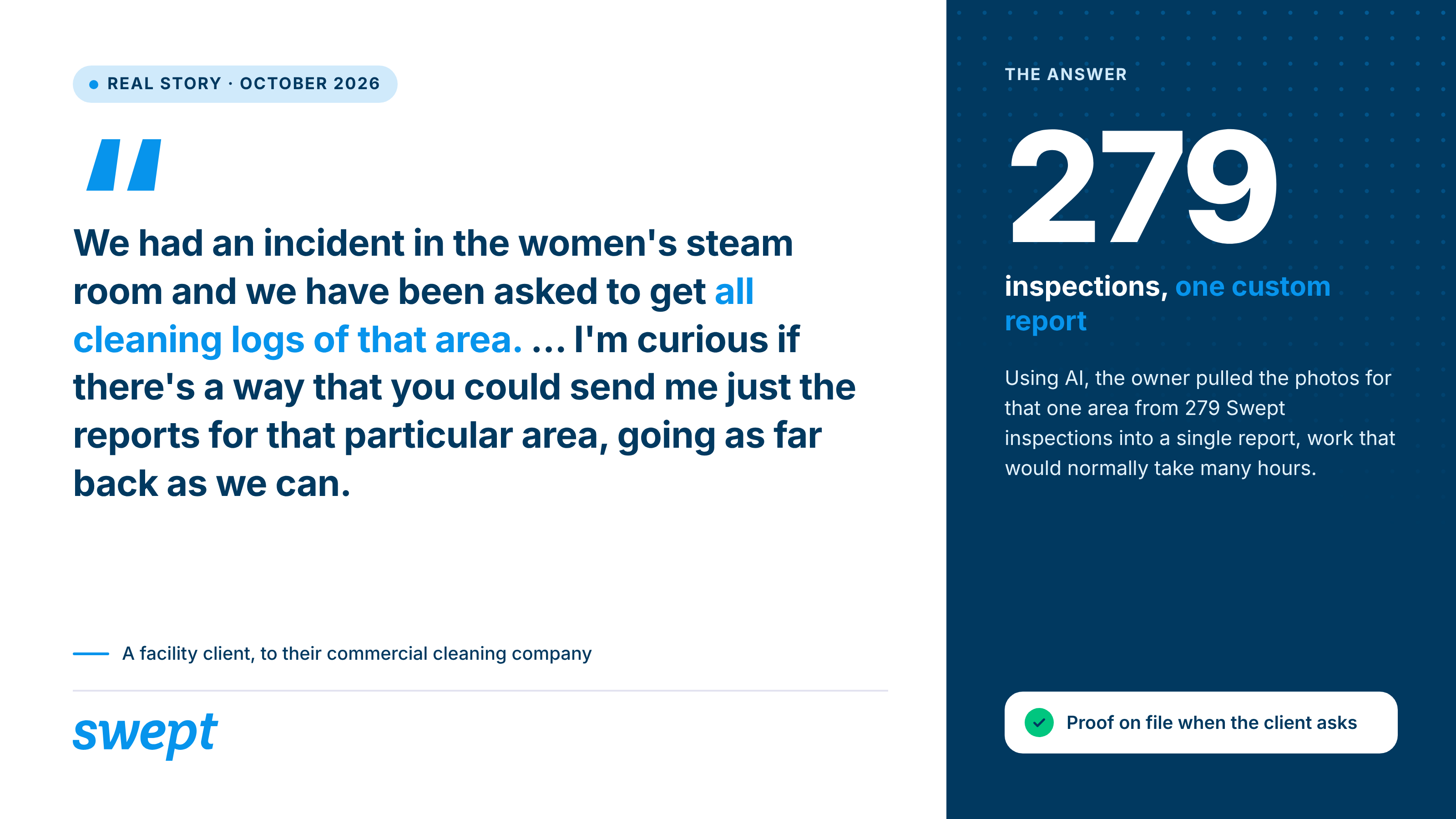
- A client portal. Inspection results and messages live in one place, on the record, instead of scattered across texts and voicemails. If there is an audit or any of off request from the client, Swept's connector to Claude can generate PDF outputs on any aspect the client is seeking.
Proof only works if it's honest. In one audit, 11 of 70 "proof" photos turned out to be the same image. Photos captured in the app during the shift, with a time stamp, carry far more weight than pictures texted to a manager after the fact.
Governance: know who comes in and out of the building
For many clients, including offices, medical buildings, banks and schools, security is part of the buying decision. They're handing your team keys and alarm codes. Show them how you manage access.
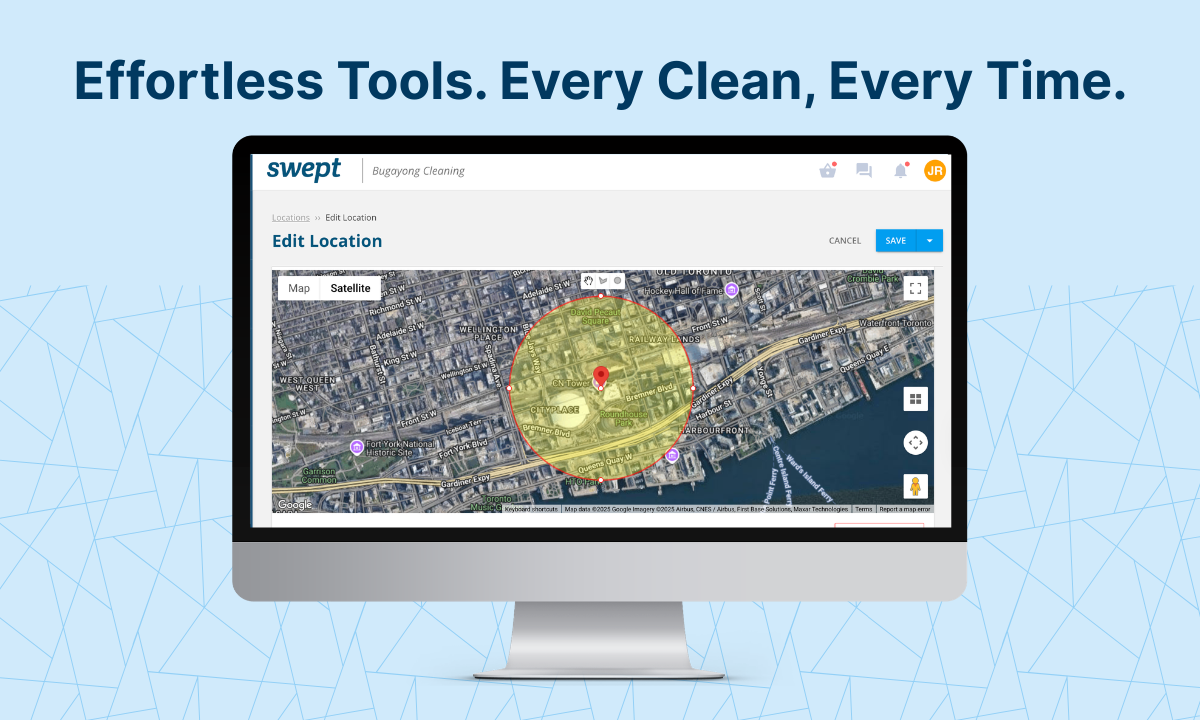
- Geofenced clock-in and clock-out. Cleaners clock in at the door, and the time and location are recorded at the start and end of every shift.
- Time stamps a client can rely on. In one case, clock-out records proved a cleaning crew had left a bank before a robbery took place. That record protected the crew and the client relationship.
- Changes on the record. If a time entry is edited, the system logs who changed what, so your hours hold up.
- Security instructions by location. Access details live with the location, not in someone's head or a group text.
Position this as protection for everyone. The client knows who was in their building, and your cleaners have a record that they did their job.
Retain, renew and grow: the owner's view
Winning the contract is the start. Keeping it at the price you bid is the business.
On Monday morning, an owner should be able to answer three questions without driving to a single site: Which buildings ran over their hours? Which ones are profitable? Which clients need a call? Labor typically runs 45% to 55% of revenue in commercial cleaning. A building running over 60% is a candidate for repricing or a scope conversation, and you want to know that this week, not at year end.
The same record becomes your renewal pitch. Instead of asking a client to sign again on faith, you show them a year of inspections, resolved issues and on-time arrivals. Everything your cleaners and field managers did, night after night, is what makes that report true.
Growth follows. A client who trusts your reporting is more likely to give you the next building, and a prospect who sees a sample of it is more likely to give you the first.
Rebuild your pitch: a 7 point checklist for your next proposal
- Open with their building, not your history. Walk through one night at their site, hour by hour.
- Swap adjectives for evidence. Bring a sample checklist, an inspection report and a photo log.
- Explain how they'll hear about problems, and how fast. "A problem found at 10:45 PM is a client conversation by 7:05 AM."
- Show who comes in and out, and how it's recorded.
- Name your quality targets. Inspection pass rate, response time on issues, how often you inspect.
- Show what they'll receive every week and at renewal.
- Bring your team into the pitch. Introduce the field manager who will run their building, and explain how you communicate with a crew that speaks a range of languages.
Win the contract, then keep it
The janitorial companies winning contracts today aren't louder. They're clearer. They show a prospect exactly what will happen in their building tonight, and they prove it every night after. Swept helps janitorial companies run that night and keep the record, with more than 50,000 cleaners active every week and over 1 billion hours logged.
If you'd like to see how your next proposal could look, we'll walk through it with you.